Winter Storm Disrupts US Air Travel: Trading Implications 2024
Key Takeaways
A major winter storm has paralyzed air travel across the US Northeast, leading to thousands of flight cancellations and delays. This event creates immediate ripple effects across multiple financial markets, from airline stocks and jet fuel futures to travel-related equities and volatility indices. For traders, such systemic disruptions present both short-term tactical opportunities and longer-term strategic insights into sector resilience and operational risk.
Anatomy of a Travel Meltdown: The Northeast Winter Storm
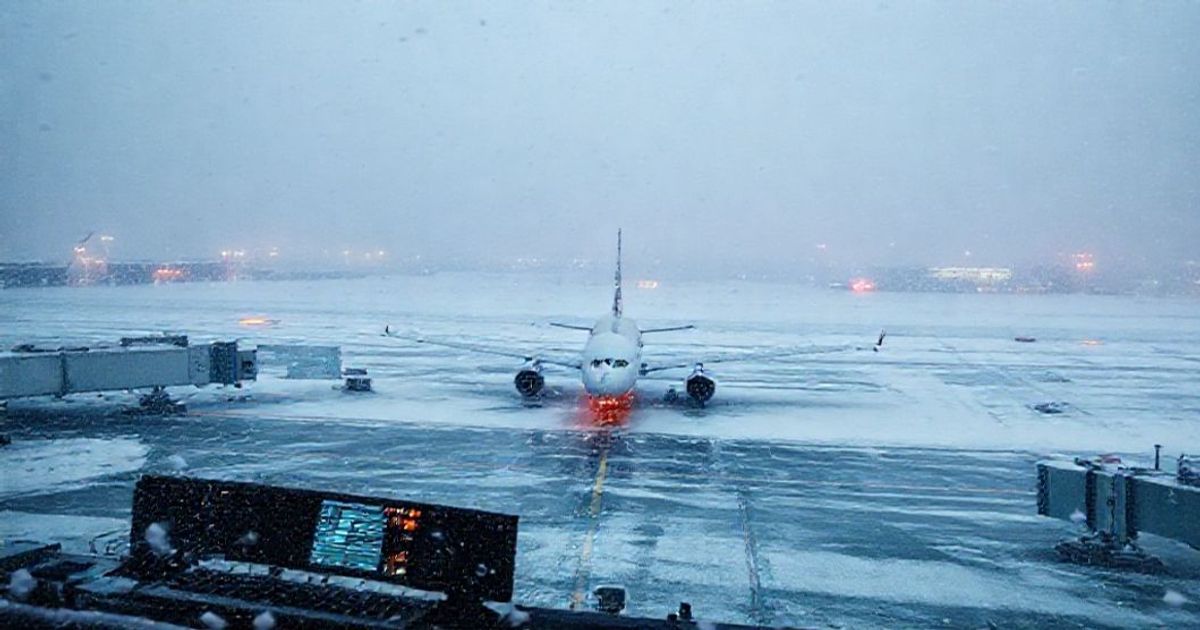
A powerful winter weather system, combining heavy snowfall, high winds, and freezing rain, has swept through key Northeast transportation hubs, including New York (JFK, LGA, EWR), Boston (BOS), and Washington D.C. (DCA, IAD). The Federal Aviation Administration (FAA) has implemented ground stops and delays, while airlines have preemptively canceled flights to avoid stranding aircraft and crews. This cascading failure highlights the fragility of tightly scheduled hub-and-spoke networks, where a disruption in one major node reverberates across the entire national and global system.
Immediate Market Impact on Airline and Travel Sectors
The financial fallout is immediate. Shares of major carriers with significant Northeast exposure, such as Delta Air Lines (DAL), American Airlines (AAL), and JetBlue (JBLU), typically face downward pressure. The costs are multifaceted: direct operational expenses for de-icing, rebooking, and accommodating passengers; lost revenue from canceled flights; and potential long-term brand damage. Conversely, airlines with less concentration in the affected region may see relative outperformance. The sell-off often presents a potential entry point for contrarian investors, as the market tends to over-penalize stocks for short-term, non-recurring weather events, assuming the airline's underlying fundamentals remain intact.
Commodities and Derivatives: Jet Fuel and Volatility
The disruption creates a direct, if temporary, shock to demand for jet fuel. A significant drop in flights leads to a sudden surplus at regional delivery points, potentially pressuring near-term jet fuel crack spreads and futures prices on the NYMEX. Traders monitor the CME Group's RBOB and heating oil contracts (components of the jet fuel crack spread) for signs of dislocation. Furthermore, such events often spike volatility. The CBOE Volatility Index (VIX) may see upward movement as uncertainty rises, while ETF products like the U.S. Global Jets ETF (JETS) experience elevated options activity, presenting opportunities in volatility arbitrage or hedging strategies.
Ancillary and Contrarian Plays
The impact extends far beyond airlines. Travel booking platforms like Booking Holdings (BKNG) and Expedia (EXPE) may see a surge in rebooking fees but also a drop in new bookings, creating mixed signals. Hotel stocks in affected cities face cancellations, while properties in sunbelt hubs may see unexpected demand from stranded travelers. Railroad and freight companies like Norfolk Southern (NSC) or trucking firms could see increased interest as shippers seek alternatives for time-sensitive cargo. This is a classic example of a sector rotation trigger based on a discrete event.
What This Means for Traders
Traders must adopt a multi-asset, multi-timeframe approach to such events. In the immediate term (1-3 days), focus on tactical plays: short-term puts on exposed airlines, trading the volatility crush in jet fuel futures as operations normalize, or pairs trades (e.g., long a Southwest [LUV] with less Northeast exposure, short a JetBlue). Monitor real-time flight tracking data and FAA advisories for clues on the duration of the disruption.
For the medium term (1-4 weeks), assess the earnings pre-announcement risk. Airlines will quantify the storm's impact in their quarterly guidance. A larger-than-expected cost could lead to post-event downgrades. This period also allows for analysis of which companies managed the crisis most effectively—a factor in long-term operational alpha.
Strategically, this event reinforces key lessons: the market's tendency to overreact to operational disruptions, the critical importance of geographic diversification in transport investments, and the value of holding strategic hedges (like long volatility positions or out-of-the-money puts on travel ETFs) during peak seasonal risk periods (Q1 and Q4).
Conclusion: Beyond the Storm
While the snow will melt and schedules will normalize, the financial and operational lessons of this Northeast travel disruption will linger. For the markets, it's a stress test of corporate resilience and supply chain elasticity. For traders, it's a live-case study in event-driven trading across equities, commodities, and derivatives. The most successful participants will be those who look past the headline cancellations to model the second- and third-order effects on related industries, volatility surfaces, and consumer behavior. As climate patterns suggest the potential for increased frequency of extreme weather events, the ability to quickly price and trade around these operational shocks will become an increasingly valuable skill in a trader's toolkit. The immediate chaos at the airport terminal translates directly into calculated opportunity on the trading terminal.