What Will Drive Starbucks (SBUX) Stock in 2026? 3 Key Factors
Key Takeaways
- Starbucks' stock trajectory in 2026 will be primarily determined by its success in China, its largest growth market, and its ability to navigate local competition and economic conditions.
- The company's operational execution, particularly in improving U.S. store throughput and managing labor costs, will be a critical margin driver and sentiment indicator.
- Innovation in the core beverage business and expansion into new dayparts and product categories will be essential for sustaining comparable sales growth and justifying its premium valuation.
As Starbucks (SBUX) navigates the post-pandemic landscape, investors are looking beyond near-term volatility to the fundamental drivers that will shape its performance in 2026. The stock, a long-term winner in the consumer discretionary sector, faces a new set of challenges and opportunities. While 2024 and 2025 will be years of strategic execution, 2026 will likely be a year where the results of those plans are fully realized and judged by the market. For traders and long-term investors alike, focusing on three critical, interconnected factors will provide the clearest signals for SBUX's directional move.
1. The China Growth Engine: Recovery, Rivalry, and Real Estate
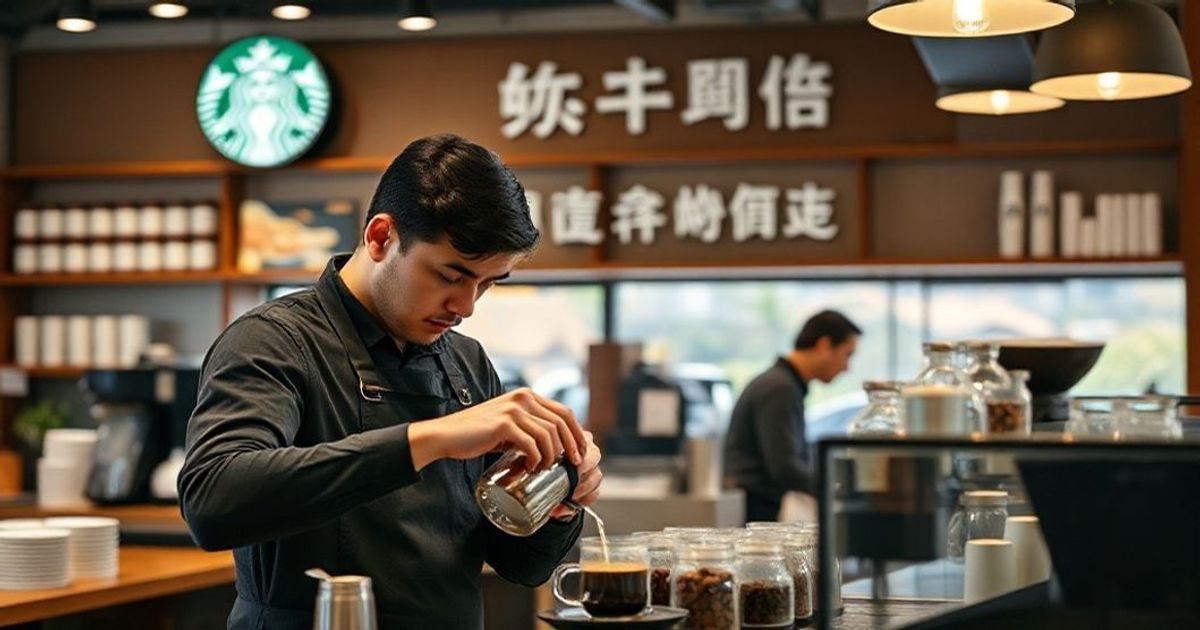
China remains the most significant swing factor for Starbucks' global growth narrative. By 2026, the company aims to have 9,000 stores in the country, up from around 7,000 in early 2024. This expansion is not just about unit count; it's about sustainable, profitable growth. Traders must monitor two competing dynamics: Starbucks' brand resilience versus the ferocious rise of local competitors like Luckin Coffee and Cotti Coffee, which compete aggressively on price and digital convenience.
The health of the Chinese consumer economy will be paramount. A robust recovery in consumer confidence and disposable income would significantly benefit Starbucks' premium positioning. Key metrics to watch will be comparable store sales growth in China (not just reported, but on a two-year stack to smooth volatility) and store-level margin trends. Furthermore, the success of Starbucks' "Reinvention" plan in China—emphasizing digital integration, customized store formats, and local innovation—will be a key differentiator. Any sign of market share loss or margin compression here will weigh heavily on the stock's premium valuation.
2. Operational Execution in the Mature U.S. Market
While China offers growth, the U.S. business provides the profit foundation. By 2026, the U.S. market must demonstrate it can deliver consistent, mid-single-digit comp growth driven by transaction growth and strategic pricing, not just inflation. The core focus will be on operational efficiency and store throughput.
The company's massive investments in store technology, new equipment (like the Siren System for cold beverages), and labor models are designed to reduce customer wait times and improve the partner (employee) experience. In 2026, these investments must translate into tangible metrics: faster service times, higher customer connection scores, and stabilized or improved labor costs as a percentage of sales. For traders, U.S. quarterly comparable sales and restaurant-level operating margins will be the primary pulse checks. Stagnant traffic or declining margins would signal deeper issues with the brand's value proposition or cost structure, potentially triggering a de-rating of the stock.
3. Innovation and Category Expansion Beyond the Core
Starbucks cannot rely on store expansion alone. By 2026, its ability to innovate within the beverage category and successfully expand into adjacent areas will be critical for driving average ticket growth and attracting new occasions. This factor has two components:
- Beverage Innovation: The chain must continue its legacy of creating viral, seasonal, and permanent beverage platforms (e.g., Oleato, Refreshers extensions). Success here drives frequency and social media buzz.
- Category & Daypart Expansion: The afternoon and evening dayparts remain under-penetrated opportunities. The success of products like the Starbucks Evenings menu (where available) and the broader food platform will be crucial. Furthermore, the growth trajectory of the ready-to-drink (RTD) business in partnership with PepsiCo, and the consumer packaged goods (CPG) segment, will be watched as higher-margin, capital-light growth drivers.
Failure to launch successful new platforms would make Starbucks vulnerable to being seen as a stagnant, mature business, capping its multiple.
What This Means for Traders
Traders should position their watchlists and strategies around these catalysts. Consider using a combination of technical levels and fundamental catalysts derived from these factors.
- Catalyst-Driven Trading: Earnings reports (especially Q4 and Q1 which include key holiday periods) will be high-volatility events. Focus on the management's commentary and metrics on China comps, U.S. traffic, and global operating margin. Options strategies around these events can be employed, expecting increased implied volatility.
- Sector Rotation Plays: SBUX often trades as a proxy for global consumer strength and discretionary spending. In periods of anticipated economic softness in 2025/2026, traders might watch for relative weakness in SBUX compared to consumer staples. Conversely, signs of a strong global consumer rebound could make SBUX a leadership long candidate.
- Valuation Band Trading: The stock tends to trade within a forward P/E range. Dips toward the lower end of this historical range (often coinciding with fears over China or U.S. comps) may present buying opportunities for those confident in the 2026 story, while surges to the upper band on exuberant news may be chances to take profits.
Conclusion: A Story of Execution
The narrative for Starbucks stock in 2026 is being written today through its "Triple Shot Reinvention" strategy. By 2026, the market will have moved from evaluating the promise of this plan to judging its hard results. The three factors—China's growth, U.S. operational excellence, and relentless innovation—are deeply intertwined. Success in China fuels the growth narrative and multiple. Operational efficiency in the U.S. protects the earnings base and supports shareholder returns. Innovation ensures the brand remains relevant and can grow beyond its morning coffee roots.
For the investor with a 2026 horizon, the task is to monitor the execution on these fronts quarter by quarter. For the active trader, these factors provide a framework for identifying the high-impact news and data points that will move the stock. Ultimately, Starbucks' ability to seamlessly blend its global scale with local relevance and operational precision will determine whether SBUX in 2026 is a stock experiencing a rejuvenated growth phase or one grappling with the constraints of its massive size.