US Jobless Claims Beat Estimates at 214K, Labor Market Stays Strong in 2024
Key Takeaways
The latest U.S. labor market data reveals a resilient economy as initial jobless claims for the week ending December 13 came in at 214,000, significantly lower than the 225,000 estimate. The four-week moving average also declined, while continuing claims rose slightly above forecasts. This report, combined with recent ADP data, paints a picture of a cooling but still fundamentally tight labor market, a critical input for Federal Reserve policy and market direction.
Decoding the Numbers: A Stronger-Than-Expected Labor Pulse
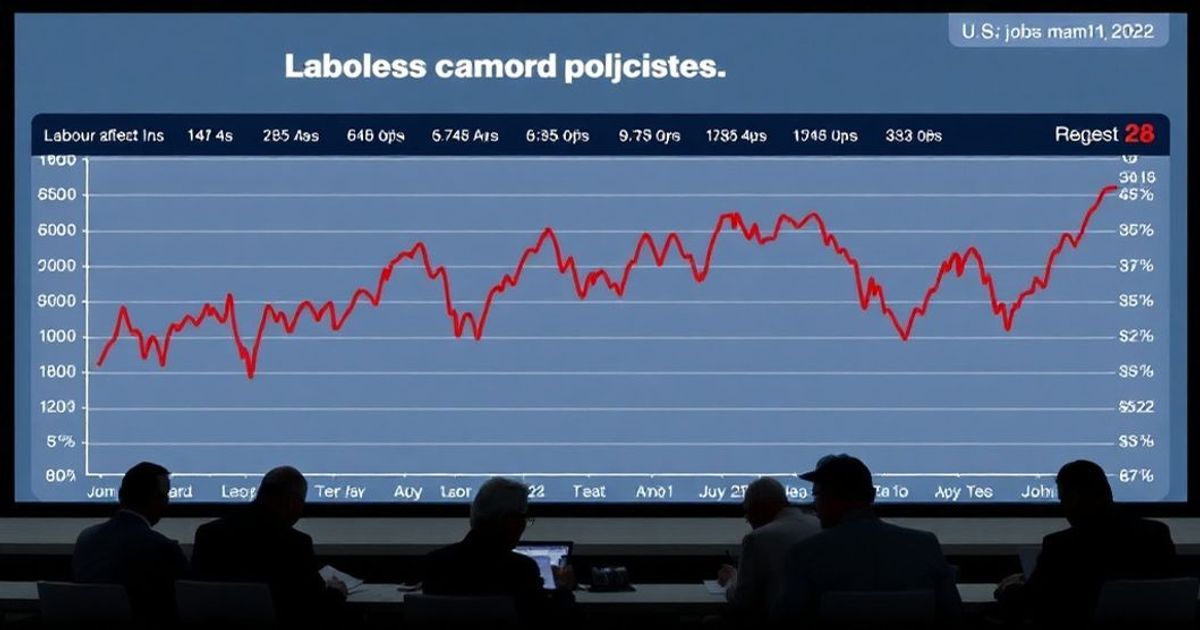
The U.S. Department of Labor's latest weekly jobless claims report delivered a clear message of economic resilience. Initial claims, a leading indicator for labor market health, fell to 214,000 from a revised 224,000 the prior week, handily beating the consensus estimate of 225,000. This marks a return to the lower end of the range observed throughout much of 2023, suggesting that the feared rapid deterioration in employment conditions has not materialized.
Perhaps more telling is the four-week moving average for initial claims, which decreased by 750 to 216,750. This metric smooths out weekly volatility and is a preferred gauge for economists. Its steady decline from recent highs indicates the underlying trend remains one of modest strength, not accelerating weakness.
The Nuance in Continuing Claims
While the headline initial claims number was unequivocally strong, the report contained one element of softness. Continuing claims, which measure the number of Americans already receiving unemployment benefits, rose to 1.923 million, slightly above the 1.900 million estimate. However, context is crucial. The four-week moving average for continuing claims actually decreased by 5,250. Furthermore, the prior week's level was revised down significantly, from 1.897 million to 1.885 million. This pattern of revisions and mixed signals suggests the labor market is in a state of rebalancing rather than breaking.
What This Means for Traders
For financial market participants, this report has immediate and significant implications across asset classes.
For Forex and Rates Traders: The Fed Policy Calculus
A strong labor market reduces the urgency for the Federal Reserve to pivot to aggressive rate cuts. Traders should monitor the front end of the yield curve and the U.S. Dollar Index (DXY). Solid claims data supports a "higher for longer" narrative on interest rates, which can provide underlying support for the dollar, particularly against currencies from central banks that are further along in their cutting cycles (e.g., the ECB, BoC). It also tempers expectations for a March Fed rate cut, potentially leading to a bearish steepening of the yield curve as long-term growth expectations adjust.
For Equity Traders: Sector Rotation Signals
The market's interpretation will hinge on the "Goldilocks" narrative. A labor market that is cooling enough to curb inflation but not so cold as to trigger a recession is the ideal scenario for a broad market rally.
- Cyclical Sectors: Strength in consumer discretionary, industrials, and financials could be supported by the signal of ongoing economic resilience and healthy consumer spending potential.
- Growth vs. Value: Strong data may initially weigh on long-duration growth stocks (big tech) as it supports higher yields, but if it feeds into stronger corporate earnings expectations, the impact could be muted or reversed.
- Actionable Insight: Watch for rotation into sectors that benefit from economic durability rather than those betting on an imminent deep Fed easing cycle.
For Macro and Commodity Traders
A firm labor market supports the outlook for steady, albeit moderate, demand. This is generally constructive for industrial commodities like oil and copper, as it suggests underlying industrial and consumer activity remains intact. However, it also implies that the Fed will remain vigilant on inflation, capping the upside for gold, which thrives in a environment of falling real yields and imminent rate cuts.
Geographic and Complementary Data: A Fuller Picture
The state-level data provides color to the national figures. The largest decreases in claims were seen in major industrial and population centers like Illinois (-7,242), New York (-5,720), and Pennsylvania (-5,129). This suggests strength is concentrated in economically significant regions. Conversely, increases in smaller states like Rhode Island and West Virginia may reflect more localized issues.
Furthermore, the recent ADP Pulse data adds a forward-looking dimension. After a weak November monthly report, the weekly ADP Pulse for early December showed a rebound to +11.5K. While a different methodology, it hints that the December payrolls picture may stabilize, aligning with the stronger jobless claims print.
Conclusion: Navigating a Resilient but Transitioning Market
The December 13 jobless claims report reinforces the view that the U.S. labor market entered the final stretch of 2024 on solid footing. The significant beat on initial claims, coupled with a declining four-week average, argues against a near-term hard landing. For the Federal Reserve, this data supports a patient and measured approach to policy normalization, likely pacing rate cuts gradually rather than embarking on an emergency easing cycle.
For traders, the key takeaway is that the baseline economic scenario remains one of resilience. Market narratives that rely on an imminent, sharp economic downturn are challenged by this data. Positioning should favor quality cyclicals, a cautiously bullish dollar stance against certain peers, and a balanced view on rates that acknowledges strength but also the broader disinflation trend. The path forward will be dictated by whether this labor market strength translates into persistent services inflation or remains a pillar of steady consumption without re-igniting price pressures. The next major test will be the upcoming monthly Non-Farm Payrolls report, which will provide the exclamation point on the year's labor market story.