Santa Rally 2024: S&P 500 Hits Record High on Christmas Eve
Key Takeaways
- The S&P 500 closed at a record high on Christmas Eve for the first time since 2013, confirming a powerful "Santa Rally."
- The Dow Jones Industrial Average and Nasdaq Composite also posted strong gains, with all three major indices in positive territory for December.
- The rally is fueled by cooling inflation data, a dovish pivot from the Federal Reserve, and resilient economic indicators, creating a bullish year-end momentum.
- Historically, a strong Santa Rally often leads to positive returns in the first quarter of the following year, a trend traders are watching closely.
A Historic Christmas Eve Session
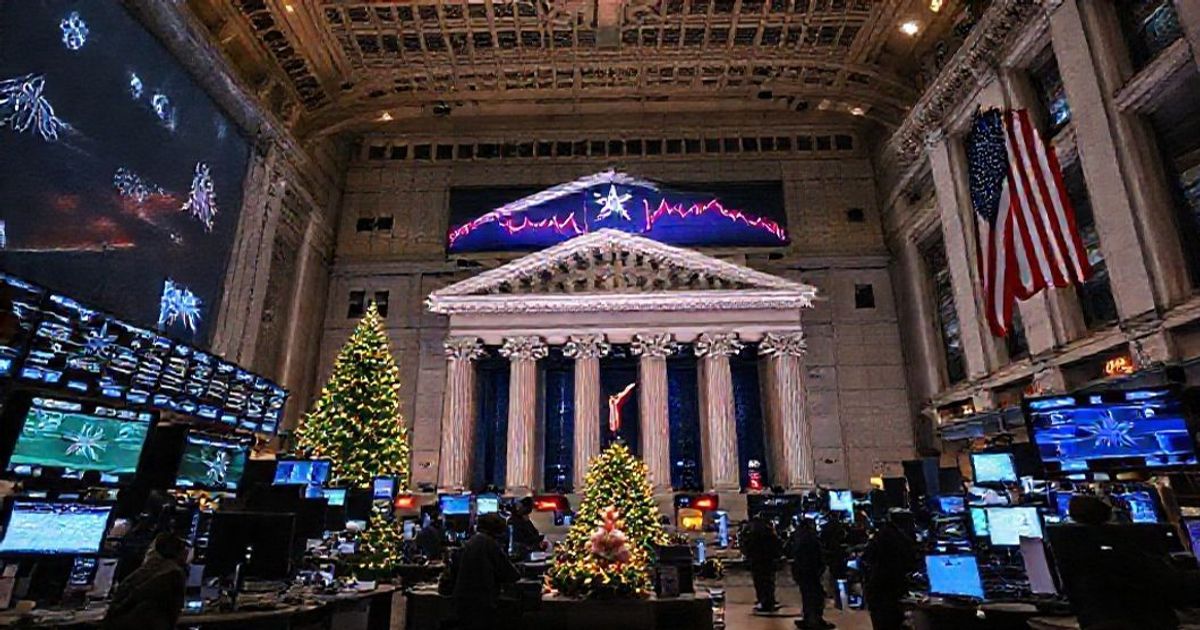
The final trading session before Christmas 2024 delivered a gift to Wall Street, wrapping up a remarkable year with a historic close. For the first time in over a decade, the S&P 500 clinched a record closing high on Christmas Eve. This wasn't an isolated event; the Dow Jones Industrial Average also soared to a new peak, while the technology-heavy Nasdaq Composite posted solid gains, flying high into the holiday break. This collective strength underscores a broad-based bullish sentiment that has taken hold following the Federal Reserve's decisive policy shift earlier in the month.
The session was characterized by light volume, typical of a holiday-shortened week, but the price action spoke volumes. The lack of significant selling pressure, even at all-time highs, suggests a market confident in its footing. This milestone is more than symbolic—it represents the culmination of a fourth-quarter surge that has seen the major indices recover from a volatile autumn and charge into uncharted territory, setting a decidedly optimistic tone for the year's end.
The Catalysts Behind the Year-End Surge
Several key factors converged to propel stocks to these record levels. The primary engine has been the Federal Reserve's explicit pivot toward a more accommodative stance. With the latest Consumer Price Index (CPI) and Personal Consumption Expenditures (PCE) reports confirming that inflation is trending convincingly toward the Fed's 2% target, policymakers signaled that the rate-hiking cycle is conclusively over and that cuts are on the table for 2024.
This fundamental shift has dramatically recalibrated market psychology. The fear of "higher for longer" interest rates, which weighed heavily on equities for much of 2023, has been replaced by anticipation of a supportive monetary policy. Lower future rates decrease the discount rate for future corporate earnings, boosting equity valuations, particularly for growth-oriented sectors. Furthermore, the easing of financial conditions is seen as a tailwind for economic growth, reducing the perceived risk of a hard landing.
Sector Performance and Market Breadth
The rally has been notably inclusive, a healthy sign for its sustainability. While mega-cap technology stocks—the "Magnificent Seven"—have contributed significantly, there has been a noticeable broadening out. Financials have benefited from the steepening yield curve, industrials have risen on hopes for sustained economic expansion, and even rate-sensitive real estate investment trusts (REITs) have rebounded from their lows.
Market breadth, a measure of how many stocks are participating in an advance, has improved markedly from the narrow leadership seen earlier in the year. This suggests the rally is being driven by a genuine improvement in the macroeconomic outlook rather than mere momentum in a handful of names. For traders, this broadening creates more opportunities across various sectors and reduces portfolio concentration risk.
What This Means for Traders
The record close presents both opportunities and cautions for active traders. The primary takeaway is that the trend is unequivocally your friend. The momentum heading into year-end is strong, and historical seasonality patterns, like the "Santa Rally" and the subsequent "January Effect," favor the bulls. Traders should consider strategies that align with this momentum, such as riding strength in leading sectors or using pullbacks toward key moving averages as potential entry points.
However, trading at all-time highs requires disciplined risk management. Volatility often compresses during holiday-thinned sessions, only to reassert itself when full volume returns in January. Traders should be wary of becoming overly complacent. Key levels to watch are the recent breakout points on the S&P 500 and Dow; a decisive break back below these could signal a failed breakout and prompt a sharper correction.
Actionable Insights:
- Monitor the VIX: The CBOE Volatility Index (VIX) remains at subdued levels. A sudden spike above 20 could signal rising fear and a potential pause or pullback in the equity advance.
- Focus on Relative Strength: In a broadening market, identify sectors and individual stocks showing relative strength against the broader index. Rotation into lagging sectors like small-caps (IWM) could be the next leg of the rally.
- Prepare for January Volume: The real test of conviction will come in the first full trading week of January. Watch for institutional flows and volume confirmation on any further moves higher.
Looking Ahead: The Santa Rally and Beyond
The historic Christmas Eve close firmly places 2024 in the history books as a year of a potent Santa Rally. According to the "Stock Trader's Almanac," the last five trading days of December and the first two of January have historically shown a strong tendency for gains. This year's performance fits that pattern perfectly, fueled by a powerful fundamental catalyst in the Fed's pivot.
As Wall Street looks toward 2024, the question shifts from whether the rally will occur to whether it has staying power. The early January period will be critical. Traders will scrutinize the first wave of Q4 earnings reports and economic data, particularly jobs figures, to assess if corporate profits and the economy can justify current valuations. The market has priced in a near-perfect soft landing scenario; any significant deviation from this path—either a reacceleration of inflation or a sharper-than-expected economic slowdown—could introduce volatility.
Nevertheless, the momentum generated by this year-end surge creates a formidable bullish tailwind. The record close on Christmas Eve is not just a milestone; it is a statement of confidence. It suggests that after navigating the challenges of high inflation and aggressive rate hikes, investors are betting that the market has entered a new phase of growth, supported by stabilizing monetary policy and resilient economic fundamentals. For traders, the directive is clear: respect the trend, manage risk diligently, and prepare for a dynamic start to the new year.