Nvidia Tests China Return with H200 AI Chip in 2024
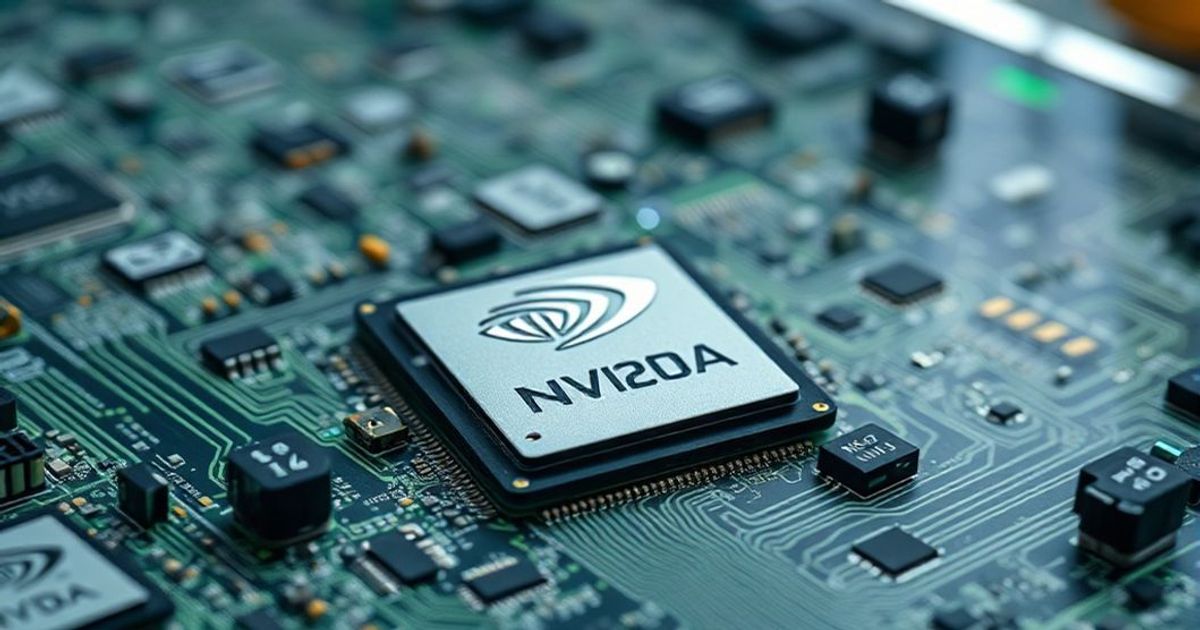
Nvidia's Strategic Gambit: The H200 Chip and the China Market
The global semiconductor landscape is witnessing a pivotal maneuver as Nvidia (NVDA), the undisputed leader in AI and data center GPUs, reportedly tests a path back into the lucrative Chinese market. Following stringent U.S. export controls that curtailed sales of its most advanced chips, Nvidia is now planning to introduce a modified version of its upcoming flagship, the H200 AI accelerator, specifically for China. This development is more than a product launch; it's a high-stakes strategic play with profound implications for global tech supply chains, AI development, and geopolitical tech competition.
The Genesis: U.S. Controls and Nvidia's Initial Response
In late 2022 and throughout 2023, the U.S. government implemented sweeping export restrictions aimed at limiting China's access to advanced semiconductor technology, particularly chips crucial for artificial intelligence and supercomputing. These controls directly targeted Nvidia's A100 and H100 data center GPUs, the engines powering the global AI boom. Nvidia's initial response was to develop modified, compliant versions for the Chinese market—the A800 and H800. However, updated rules in October 2023 closed that loophole, effectively banning these downgraded chips as well and leaving a significant revenue gap. The H200 plan represents Nvidia's next move to navigate this complex regulatory environment.
Decoding the H200 for China: Specifications and Strategy
While full specifications for the China-bound H200 are not public, the strategy is clear: create a chip that sits just below the performance thresholds set by U.S. export controls while remaining competitive enough to appeal to Chinese cloud providers and AI firms. The original H200, set for global release in Q2 2024, is a beast, featuring 141 GB of cutting-edge HBM3e memory, offering nearly double the memory bandwidth of the H100. The Chinese variant will likely see significant reductions in key metrics like memory bandwidth and interconnect speed to achieve compliance.
Nvidia's calculus is multifaceted:
- Revenue Preservation: China historically represented a multi-billion dollar market for Nvidia's data center segment. Abandoning it entirely is not commercially viable.
- Market Defense: Vacating the space creates a vacuum for domestic Chinese competitors like Huawei (Ascend chips) or Biren Technology to solidify their position, creating long-term rivals.
- Ecosystem Lock-in: Nvidia's CUDA software platform is the industry standard. Keeping Chinese developers within the CUDA ecosystem is a critical long-term strategic advantage.
What This Means for Traders
For traders and investors monitoring NVDA, this development is a critical variable in the investment thesis.
Short-Term Considerations (Next 3-6 Months)
- Regulatory Headline Risk: Expect volatility around news cycles related to U.S. government approval or rejection of the H200's specifications. Any hint of stricter enforcement will pressure the stock.
- Earnings Guidance Scrutiny: Listen meticulously to management commentary on future earnings calls regarding the contribution and timeline of "China-compliant" products. Clarity will be a positive catalyst; vagueness a negative.
- Supply Chain Signals: Monitor orders from key Taiwanese foundries (TSMC). Specific production lines for a distinct China SKU could indicate the scale and seriousness of Nvidia's commitment.
Long-Term Strategic Implications (6-18 Months+)
- Market Share Defense vs. Margin Erosion: Successfully selling a downgraded H200 in China protects top-line revenue and ecosystem moat. However, these chips will likely carry lower margins than their global counterparts. Analyze gross margin trends in the Data Center segment closely.
- The Domestic Competition Gauge: The performance delta between Nvidia's compliant H200 and the best offerings from Huawei will be a key metric. A shrinking delta signals rising competitive threat within China, potentially capping long-term pricing power.
- Geopolitical Barometer: Nvidia's ability to ship the H200 to China will serve as a real-time barometer of U.S.-China tech tensions. Easing tensions could lead to a re-rating of the stock's multiple, while further escalation remains a persistent overhang.
Actionable Trading Insights
1. Pair Trade Watch: Consider the relative performance of NVDA versus pure-play U.S. domestic AI plays or Chinese semiconductor ETFs. Nvidia's success here could see it outperform domestic-only firms while pressuring Chinese competitor valuations. 2. Options Strategy: The inherent uncertainty makes NVDA a candidate for strategies like straddles around major regulatory decision dates or earnings reports, where volatility is expected to be high. 3. Sector Correlation: Watch for spillover effects into other semiconductor capital equipment firms (e.g., AMAT, LRCX). A clear, compliant path for Nvidia could be seen as a positive for the broader semi-equipment sector's access to the Chinese market.
The Road Ahead: Challenges and the Final Calculation
Nvidia's path is fraught with challenges. The U.S. Commerce Department's Bureau of Industry and Security (BIS) must approve the chip's specifications, a process subject to political winds. Furthermore, Chinese clients, having experienced supply disruption, may accelerate their "de-Nvidia" strategies, diversifying to domestic suppliers even if performance is inferior, for supply security.
Ultimately, Nvidia is playing a delicate game of three-dimensional chess. It must simultaneously:
- Satisfy U.S. regulators that its technology does not meaningfully advance Chinese AI military capabilities.
- Offer a product compelling enough that Chinese tech giants choose it over developing in-house alternatives.
- Maintain its technological lead globally to fuel the stock's premium valuation.
Conclusion: A Critical Inflection Point
Nvidia's attempt to bring the H200 to China is a defining moment for the company and a microcosm of the broader tech decoupling. It is not merely a sales tactic but a strategic imperative to maintain its global AI hegemony. For traders, the narrative around this effort will be a persistent driver of sentiment and volatility. Success could open a valve on a significant revenue stream and alleviate a major geopolitical overhang on the stock. Failure, or further regulatory tightening, would force Nvidia to double down on other global markets while potentially seeding its own formidable competitor in China. The coming quarters will reveal whether Nvidia's engineering and diplomatic agility can keep it at the center of the AI revolution—on both sides of the Pacific.