Narratives vs Reality: What Really Drives Bitcoin & Altcoin Prices in 2024
Key Takeaways
While sensational headlines and social media narratives can trigger short-term volatility in cryptocurrency markets, the primary driver of sustained price movements is liquidity. The reality for traders is that capital flows—measured through ETF inflows/outflows, stablecoin supply, and on-chain transaction volume—ultimately determine market direction. Understanding this divergence between narrative-driven noise and liquidity-driven reality is crucial for developing a profitable trading strategy.
The Allure of the Narrative: Why Headlines Move Markets Fast
The cryptocurrency market is uniquely susceptible to narratives. A tweet from a prominent figure, regulatory news from a major economy, or a technical breakthrough announcement can send prices soaring or plummeting within minutes. This happens because crypto markets are global, operate 24/7, and are driven by a retail-heavy participant base that often trades on emotion and momentum.
Narratives create powerful, self-reinforcing feedback loops. For example, the "institutional adoption" narrative in Q4 2023 and Q1 2024 fueled a massive Bitcoin rally in anticipation of spot ETF approvals. The "altcoin season" narrative can rapidly rotate capital from Bitcoin into smaller-cap tokens based on social sentiment alone. These narratives are not meaningless; they attract attention and can be the initial spark for a move. However, they are akin to lighting a match. Whether that match ignites a lasting fire or quickly fizzles out depends on the available fuel: liquidity.
Examples of Powerful Crypto Narratives
- The Institutional Wave: Stories of BlackRock, Fidelity, and other giants entering the space.
- The Halving Hype: The pre-programmed reduction in Bitcoin miner rewards, often framed as a supply shock event.
- The "Ethereum Killer" Saga: Narratives promoting alternative Layer 1 blockchains poised to overtake Ethereum.
- Regulatory FUD/FOMO: Fear, Uncertainty, and Doubt (or the opposite) driven by government announcements.
The Reality Check: Liquidity is the Ultimate Driver
If narratives are the spark, liquidity is the oxygen and fuel. Liquidity refers to the ease with which an asset can be bought or sold without affecting its price. In crypto, we measure the market's liquidity through several concrete, data-driven metrics that cut through the noise of headlines.
1. Spot Bitcoin ETF Flows: The New Institutional Thermometer
The launch of U.S. spot Bitcoin ETFs in January 2024 created the most transparent real-time gauge of institutional and sophisticated investor demand. Net inflows (more money entering than leaving) represent direct, buy-side pressure on Bitcoin's underlying price. Sustained net outflows indicate selling pressure. The data doesn't lie: the explosive price rally to all-time highs in March 2024 was directly correlated with weeks of consecutive net inflows totaling billions of dollars. When flows stagnated or turned negative, the price corrected or consolidated, regardless of bullish narratives.
2. Stablecoin Supply: The Dry Powder Indicator
Stablecoins like USDT and USDC are the lifeblood of the crypto trading ecosystem. They are the primary on-ramps and off-ramps and the base trading pairs for most altcoins. An aggregate increase in the total stablecoin supply on exchanges and in smart contracts signals that capital is entering the ecosystem, representing buying power waiting to be deployed. Conversely, a decreasing supply often indicates capital flight. A rising stablecoin supply during a market pullback can signal accumulation and potential for a rebound, while a falling supply during a rally can be a warning sign of weakening support.
3. On-Chain Flows and Exchange Dynamics
Blockchain data provides an unfiltered view of investor behavior. Key metrics include:
- Exchange Net Flows: Large inflows to exchange wallets often precede selling, while large outflows (to cold storage) indicate long-term holding (hodling) sentiment.
- Realized Profit/Loss: Measures the aggregate profit or loss taken by investors on a given day. Extremely high realized profit can signal a market top as investors cash out.
- MVRV (Market Value to Realized Value) Z-Score: Indicates whether an asset is trading far above or below its "fair value" based on the average cost basis of all coins.
What This Means for Traders
Successful trading requires differentiating between narrative-induced noise and liquidity-driven signal. Here’s how to apply this framework:
- Use Narratives as Timing Tools, Not Theses: A strong bullish narrative can be an entry signal, but your conviction should be validated by liquidity data. Is the narrative attracting real capital (rising ETF inflows, stablecoin supply)? If not, the move is likely short-lived.
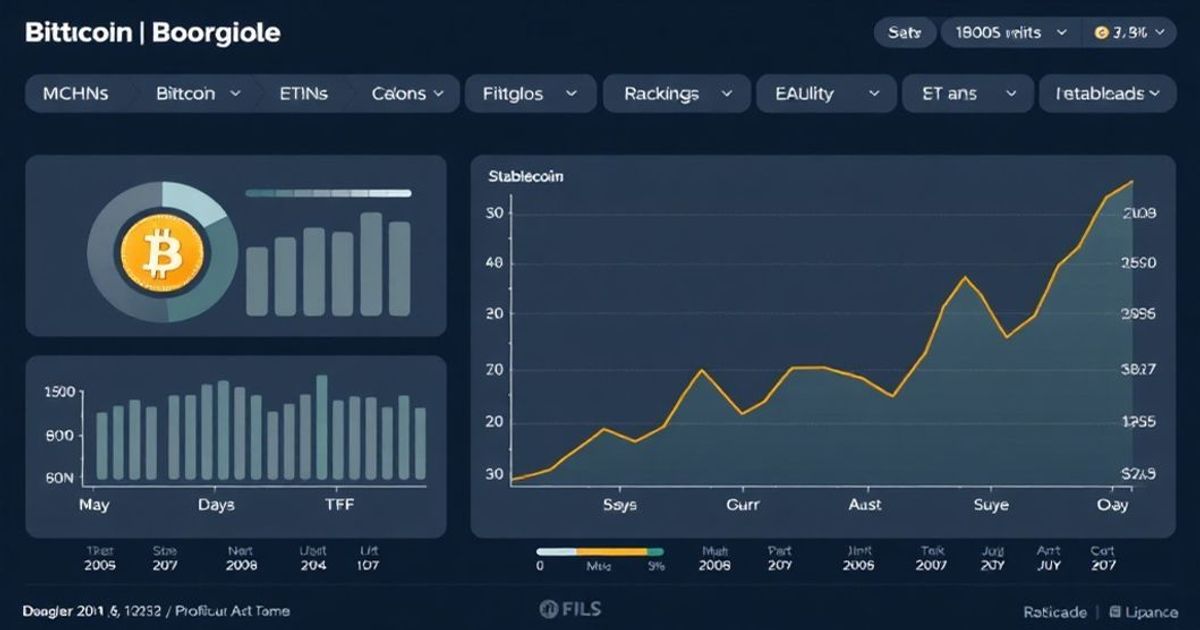
- Monitor the Liquidity Dashboard Daily: Make ETF flow data (from sources like Farside Investors), aggregate stablecoin supply (Glassnode, CryptoQuant), and exchange net flows part of your daily routine. This data provides the context for price action.
- Beware of "Narrative Exhaustion": When a price move is purely narrative-driven and begins to decouple from liquidity indicators (e.g., price pumps on low volume, or rallies during ETF outflows), it is a high-risk environment. Consider taking profits or tightening stop-losses.
- Understand the Hierarchy of Liquidity: Bitcoin, driven by ETF flows, is the primary liquidity sink. When Bitcoin's liquidity rises, it often eventually spills over into altcoins. Watch for Bitcoin dominance trends. An altcoin rally during *stable or rising* Bitcoin dominance is a stronger sign of altcoin strength than one occurring during a Bitcoin sell-off.
Conclusion: Navigating the Two-Layered Market
The cryptocurrency market operates on two distinct layers: the noisy, emotional narrative layer and the fundamental, data-driven liquidity layer. In 2024, with institutional vehicles like ETFs providing clear windows into capital movement, the importance of the liquidity layer has never been greater. Headlines will continue to cause sharp, unpredictable spikes and dips—creating both risk and opportunity. However, the sustained trends that define bull and bear markets are forged by the relentless flow of capital. For the disciplined trader, the strategy is clear: listen to the narratives to understand market sentiment, but always follow the liquidity to understand market reality. By anchoring your analysis in the hard data of ETFs, stablecoins, and on-chain activity, you can build positions supported by the true engine of price action and avoid being washed out by the temporary storms of hype.