Ethereum Activity Soars to Record Highs While Price Lags in 2024
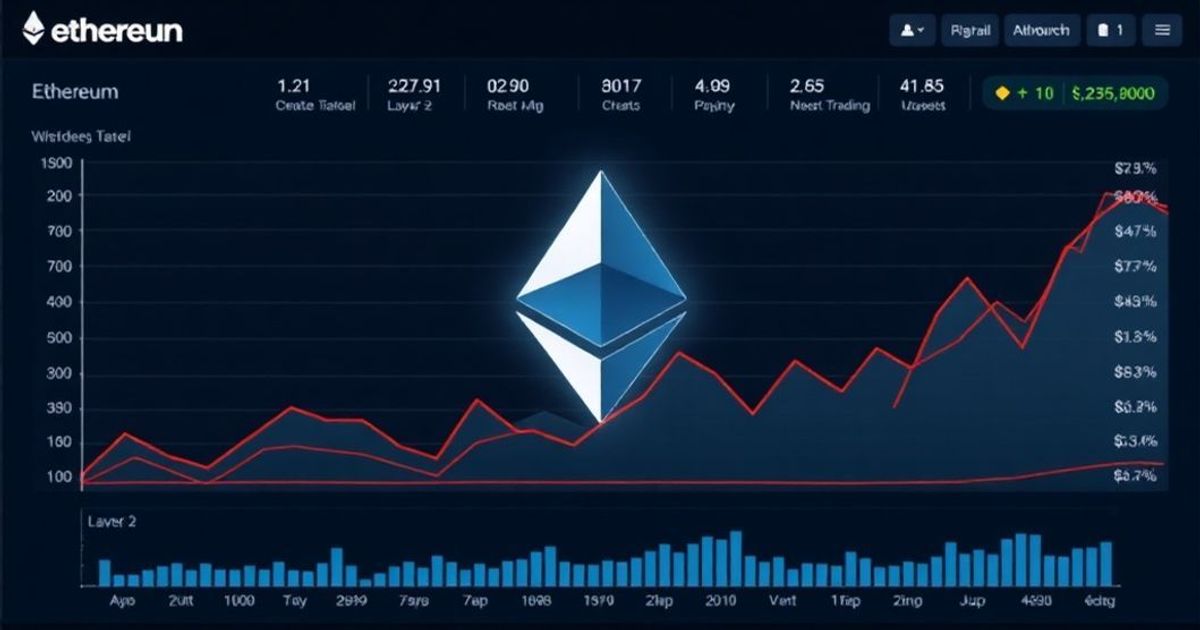
Ethereum Network Activity Hits All-Time High as Price Lags Far Behind
The Ethereum blockchain is experiencing a historic surge in on-chain activity, with key metrics like daily transactions and active addresses reaching unprecedented levels in early 2024. However, this fundamental strength has yet to translate into a proportional price rally for ETH, creating a fascinating and potentially significant divergence for market participants. This disconnect between robust network usage and subdued token valuation presents a complex puzzle for traders and long-term investors alike.
Decoding the Activity Surge: The Layer-2 Catalyst
The primary engine behind Ethereum's record-breaking activity is not a sudden influx of new users directly on the mainnet, but rather the explosive growth and maturation of its Layer-2 (L2) ecosystem. Networks like Arbitrum, Optimism, Base, and zkSync are processing millions of user transactions off-chain for speed and cost efficiency, but they ultimately settle their transaction batches and proofs back onto the Ethereum mainnet for security and finality.
This settlement process is what's driving the mainnet activity metrics to new highs. Each L2 batch contains hundreds or thousands of individual user actions, compressed into a single mainnet transaction. Therefore, while the user experience happens on L2s, the fundamental security and data availability layer—Ethereum—sees the aggregate economic activity reflected in its data. This represents a successful scaling transition: Ethereum is becoming a settlement and security layer for a vast, interconnected ecosystem of high-throughput chains.
- L2 Transaction Dominance: Over 90% of all transactions involving Ethereum's virtual machine now occur on L2s. Their growth is the direct cause of mainnet settlement demand.
- Fee Revenue Shift: A significant portion of Ethereum's fee revenue now comes from these L2 batch settlements, demonstrating their economic importance.
- DApp Migration: Major decentralized applications (DApps) in DeFi, gaming, and social sectors are increasingly deploying first or exclusively on L2s, pulling users and volume with them.
The Price Lag: Unpacking the Disconnect
Despite this undeniable network strength, Ethereum's price has struggled to break out of its established range, significantly lagging behind the growth of its own ecosystem. Several factors contribute to this lag:
- Supply Dynamics: Ethereum's post-merge issuance is significantly reduced, and the network is often net deflationary. However, large, continuous unlocks from staking protocols and venture capital portfolios have created consistent selling pressure in the spot market.
- Regulatory Overhang: The persistent uncertainty around the regulatory status of ETH, particularly regarding potential SEC classification as a security in the U.S., has dampened institutional enthusiasm and created a cautious atmosphere.
- Competition Narrative: The rise of alternative L1 blockchains and the spotlight on Bitcoin ETFs have diverted attention and capital, creating a "crowded field" perception among some investors.
- L2 Token Competition: The success of L2s has spawned their own native tokens (e.g., ARB, OP). Some speculative capital that might have flowed into ETH as a pure "bet on Ethereum scaling" is now directed towards these specific L2 tokens.
What This Means for Traders
This divergence between fundamentals and price is not just an academic observation; it creates tangible trading signals and strategic implications.
Actionable Insights:
- Monitor the Convergence: Historically, prolonged divergences between network strength and price eventually resolve. Traders should watch for a catalyst—such as clearer regulation, a spot ETH ETF approval, or a surge in L2 total value locked (TVL)—that could trigger a catch-up rally.
- L2s as a Leading Indicator: The health and TVL growth of major L2s can serve as a leading indicator for future Ethereum value accrual. Stagnant L2 growth would be a bearish signal for the entire stack.
- Assess Value Accrual: Analyze where the value is being captured. Is fee revenue from L2 settlements growing? Is ETH being used as the primary collateral across these ecosystems? The answers determine if the activity will ultimately benefit ETH holders.
- Options Strategy Consideration: The current environment of high usage but suppressed volatility can be conducive to certain options strategies, like selling covered calls or iron condors, to generate yield while waiting for a breakout.
- Diversify Within the Ecosystem: A tactical approach involves maintaining a core ETH position while allocating a portion to high-growth L2 native tokens, effectively betting on the entire ecosystem's expansion.
The Road Ahead: Sustainability and Value Capture
The critical question for 2024 and beyond is whether this surge in L2-driven activity is sustainable and, more importantly, how the value captured by this activity flows back to ETH. The "ultra-sound money" thesis for ETH relies on it being burned to pay for security and settlement. As L2s drive more settlement transactions, they should, in theory, increase the burn rate of ETH.
Furthermore, the long-term success of L2s does not diminish Ethereum; it validates its role as the foundational layer. A future where thousands of specialized L2 chains exist, all settling on Ethereum, paints a picture of ETH as a fundamental commodity—"digital oil"—powering the broader decentralized economy. The current price lag may reflect a market that is still evaluating this new model of value accrual, which is less about direct user transaction fees and more about wholesale security provisioning.
Conclusion: A Foundation of Strength Awaiting Its Moment
Ethereum's record-high network activity, fueled by its flourishing Layer-2 ecosystem, represents a fundamental success in its scaling roadmap. The current price lag highlights a market that is grappling with new dynamics: regulatory headwinds, complex supply unlocks, and a novel model where economic activity and token valuation are more loosely coupled in the short term.
For discerning traders, this divergence is not a sign of weakness but a map of potential opportunity. It underscores the importance of looking beyond simple price charts to on-chain fundamentals and ecosystem growth. The immense activity confirms robust demand for Ethereum block space and security. When—not if—the prevailing macro and regulatory winds shift, the foundational strength being built today could propel Ethereum's valuation to close the gap with its undeniable utility, making the current period a potentially strategic accumulation phase for patient investors.