Dollar Falls Ahead of U.S. Data: What Traders Need to Know in 2024
Key Takeaways
- The U.S. Dollar Index (DXY) is experiencing notable weakness as traders adopt a cautious stance ahead of key U.S. economic data releases.
- This pre-data pullback reflects market uncertainty and positioning, often creating tactical trading opportunities in major and emerging market currencies.
- The dollar's reaction post-data will hinge on whether the numbers reinforce or challenge the prevailing Federal Reserve interest rate narrative.
- Currency pairs like EUR/USD, GBP/USD, and USD/JPY are in focus, with volatility likely to spike around the data releases.
Dollar Weakness: A Prelude to Market-Moving Data
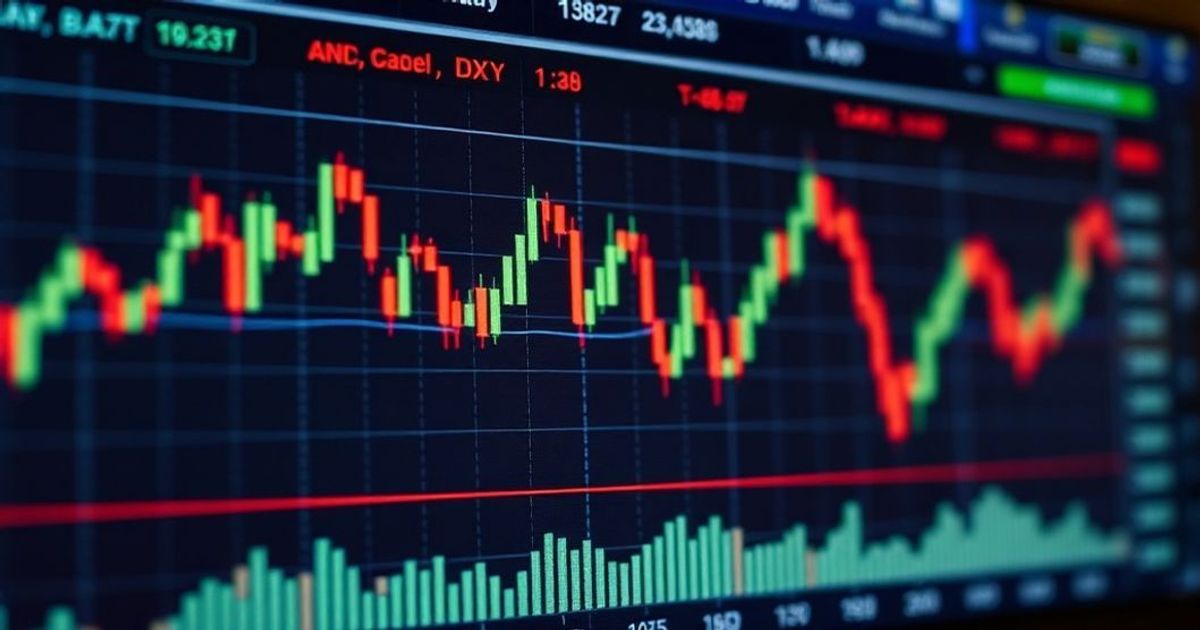
The U.S. dollar has begun the trading session on a softer footing, a phenomenon increasingly common in today's data-driven markets. This isn't mere random fluctuation; it's a calculated repositioning by the world's largest banks, hedge funds, and algorithmic traders. When the greenback falls ahead of major U.S. economic indicators—such as Non-Farm Payrolls (NFP), Consumer Price Index (CPI), or Retail Sales—it signals a market bracing for potential volatility and reassessing its expectations for Federal Reserve policy.
In 2024, with the Fed's path being the dominant macro theme, every data point is scrutinized for clues on the timing and pace of interest rate adjustments. A weakening dollar pre-data often suggests that traders are either hedging against a potentially weak number or have collectively leaned into a "sell the rumor, buy the fact" dynamic. The underlying sentiment is one of caution, as a strong data print could swiftly reverse the dollar's losses, while a weak one could accelerate the decline.
The Catalysts: Which Data Points Are Traders Watching?
The specific catalysts for dollar movement can vary, but they typically fall into three categories:
- Inflation Metrics (CPI, PCE): The core battleground for Fed policy. A higher-than-expected print fuels hawkish expectations, supporting the dollar. A softer print does the opposite. Pre-data dollar selling might indicate the market is positioning for a cooler inflation read.
- Labor Market Data (NFP, Jobless Claims): A strong labor market supports consumer spending and gives the Fed room to maintain higher rates. Weakness here can prompt bets on earlier rate cuts, weighing on the dollar.
- Growth and Consumption Indicators (GDP, Retail Sales): These gauge the economy's resilience. Robust data can delay expectations for policy easing, providing dollar support.
The "ahead of" move is a market consensus forming in real-time, often amplified by algorithmic trading models that reduce exposure ahead of known high-impact events.
Market Mechanics: Why the Dollar Dips Before the News
This pre-emptive move is rooted in sophisticated market mechanics. First, there is often a reduction in long dollar positions (profit-taking) by institutional traders to de-risk portfolios before a potential volatility shock. Second, options markets come into play; dealers hedging their gamma exposure (the rate of change of an option's delta) can mechanically suppress currency movement in the lead-up to an event, sometimes exaggerating a drift lower. Third, it reflects genuine uncertainty—when the outcome is a true coin toss, money tends to flow out of the currency most directly affected.
Furthermore, the global macro context matters. If the dollar has been on a sustained rally, a pullback before data can be a simple technical correction. Conversely, if the trend has been bearish, pre-data weakness may represent a continuation of that broader theme, with traders using the event as a catalyst for the next leg down.
Technical Analysis in a Pre-Data Environment
For technical traders, this period is critical. Key support and resistance levels on the DXY or major pairs are tested. A dollar fall might see EUR/USD approaching a major resistance zone (e.g., 1.0850 or 1.0950). Traders watch for whether the price action shows conviction (strong, sustained moves) or hesitation (choppy, range-bound action), which can offer clues on the market's latent bias. Volume analysis is also key; a decline on low volume suggests positioning, while a drop on high volume could indicate a more fundamental shift.
What This Means for Traders
Navigating a "dollar falls ahead of data" scenario requires a disciplined strategy rather than a knee-jerk reaction.
- For Short-Term/Intraday Traders: This environment favors range-bound strategies or volatility breakouts. Consider setting orders outside the current pre-data range (both long and short) to catch a post-news breakout. Avoid overcommitting capital in the ambiguous pre-data period.
- For Swing Traders: Use the pre-data weakness as an opportunity to analyze the broader chart structure. Is the dollar testing a multi-month support trendline? The post-data reaction could confirm or invalidate a larger trend. Wait for the data release and the subsequent 1-2 hour price action for a clearer signal before entering a swing position.
- For Position Traders and Investors: Focus on the fundamental narrative. Does the upcoming data have the potential to change the Fed's communicated stance? If not, pre-data moves may be noise. Your focus should be on the medium-term outlook for interest rate differentials, which are the core driver of currency valuation.
- Risk Management is Paramount: Ensure stop-losses are in place and consider reducing position sizes ahead of the release. The initial "knee-jerk" reaction post-data is often reversed within minutes, so chasing the first move is risky.
Cross-Market Implications
A softer dollar has immediate ripple effects:
- Equities: Typically supportive for U.S. multinationals (boosting S&P 500 earnings) and emerging markets (easing financial conditions).
- Commodities: Dollar-denominated assets like gold and oil often see a bid, as a weaker dollar makes them cheaper for holders of other currencies.
- Cryptocurrencies: Bitcoin and other major cryptos frequently exhibit an inverse correlation to dollar strength, potentially benefiting from a weaker greenback.
Traders should monitor these correlated assets for confirming or diverging signals.
Conclusion: Positioning for the Post-Data Reality
The phenomenon of the dollar falling ahead of U.S. data is a classic example of "the calm before the storm." It represents a market in a state of suspended animation, pricing in a spectrum of possibilities. For the astute trader, this period is not for action but for preparation. The critical task is to have a clear plan for all potential outcomes: a data beat, a miss, or a in-line print that is interpreted through the lens of recent Fed commentary.
Looking forward, as long as the Federal Reserve remains data-dependent, this pattern will repeat. The traders who succeed will be those who understand the mechanics behind the pre-move, manage their risk meticulously through the event, and execute decisively based on the confirmed trend that emerges after the data dust settles. The initial dollar weakness is just the opening act; the main event, and the real trading opportunities, begin once the numbers hit the tape.