Dave Ramsey's Warning on 500% APR Loans: A Trader's Risk Lesson
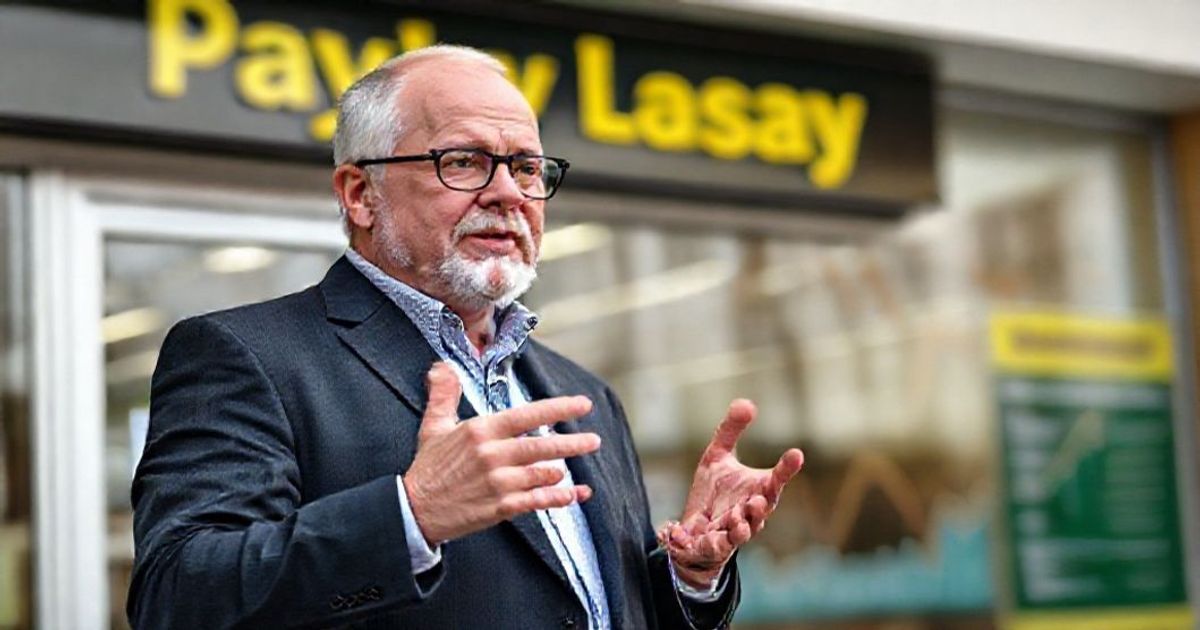
Dave Ramsey's Blunt Warning on Predatory Lending
When personal finance personality Dave Ramsey issues a stark warning like, "Teach your children, teach your grandchildren, teach everyone's children to stay away," it's a signal that transcends personal finance and enters the realm of fundamental risk management. His recent comments, targeting individuals who have taken out payday loans with APRs reaching 500%, highlight a catastrophic failure in assessing cost, probability, and consequence. For traders and investors, this isn't just a sad story about personal debt; it's a masterclass in the behavioral pitfalls and skewed risk/reward calculations that can destroy portfolios just as swiftly as they destroy bank accounts.
Deconstructing the 500% APR: The Math of Ruin
To understand the severity, one must internalize the math. A 500% Annual Percentage Rate (APR) is not merely high interest; it's a financial vortex. On a two-week $500 payday loan, the finance charge could be nearly $100. If "rolled over" or renewed just a few times, the fees can quickly surpass the principal. This creates a scenario of negative amortization, where the debt grows faster than any possible repayment from the borrower's cash flow. In trading terms, this is the equivalent of taking a highly leveraged position with daily financing costs so high that even a sideways market wipes out your capital. It's a guaranteed losing strategy, structured to fail for the borrower but succeed for the lender.
The Psychology of Desperation and Market Panic
Ramsey's anecdote points to a critical psychological driver: desperation. Individuals turn to these instruments during cash-flow crises, seeing no other option. In trading, analogous behavior is "panic selling" at market bottoms or "FOMO buying" at tops—making decisions driven by emotion (fear, greed, urgency) rather than analysis. The payday loan borrower, facing a shut-off utility or eviction, focuses solely on the immediate relief (the loan proceeds), catastrophically discounting the future cost. A trader in a losing position, fearing total ruin, may similarly double down with high-risk, high-cost leverage to try and break even, often accelerating their downfall.
What This Means for Traders
The principles behind Ramsey's warning are directly applicable to trading discipline and system design.
1. The Paramount Importance of Cost Structure
Just as the 500% APR is the destructive core of the payday loan, a trader's cost structure—commissions, spread, slippage, and financing fees—is a primary determinant of long-term viability. A strategy that appears profitable before costs can be a net loser with high-frequency trading or excessive leverage. Traders must scrutinize their cost basis with the same horror Ramsey views a 500% APR. Actionable Insight: Conduct a full audit of all trade costs annually. If your strategy's expected return does not clear your cost hurdle by a wide margin, it's as unsustainable as a payday loan cycle.
2. Leverage is a Double-Edged Sword
Payday loans are a form of extreme, high-cost leverage against one's future income. In trading, leverage amplifies both gains and losses. Using excessive margin to enter positions can trigger margin calls that force liquidation at the worst time, mirroring the debt trap of loan rollovers. Actionable Insight: Define strict, rules-based leverage limits. Treat borrowed capital as a dangerous tool, not a default. Model worst-case scenarios for leveraged positions, including compounding financing charges.
3. Behavioral Biases: The "Quick Fix" Fallacy
The appeal of the payday loan is the "quick fix"—money now, worry later. Trading is rife with similar temptations: the "get-rich-quick" scheme, the revenge trade after a loss, or abandoning a tested strategy for a hot tip. These are decisions that prioritize immediate emotional satisfaction over long-term statistical probability. Actionable Insight: Implement a mandatory cooling-off period or checklist before any non-routine trade. Ask: "Am I acting out of desperation or a disciplined plan?"
4. Asymmetric Risk and Counterparty Awareness
The payday loan business model is built on asymmetric risk: the lender has vast legal recourse and data, while the borrower is vulnerable. In trading, understanding who is on the other side of your trade is crucial. Are you trading against high-frequency firms or market makers with a structural cost advantage? Actionable Insight: Know your venue and the typical counterparties. Avoid products or platforms where the structure inherently favors the "house" or sophisticated players at the expense of retail participants.
Ramsey's Educational Crusade as a Risk Management Model
Ramsey's call to "teach everyone's children" underscores that the defense against predatory practices is education and pre-commitment to rules. For traders, this translates to continuous education and a ironclad trading plan. A plan that includes risk parameters (max drawdown, daily loss limits), approved instruments, and defined strategies acts as a constitutional barrier against making "payday loan"-like decisions in your portfolio. It's the system that protects you from yourself when desperation or greed clouds judgment.
Conclusion: Building a Fortress Against Financial Predation
Dave Ramsey's outrage at 500% APR loans is a powerful reminder that the most devastating financial risks are often those that are willingly accepted under duress or ignorance. For the trader, the lesson is to build a fortress around your capital. This fortress is constructed from low-cost access, prudent leverage, rigorous behavioral controls, and an unwavering education-first mindset. By viewing exorbitant costs and desperate trades with the same zero-tolerance attitude Ramsey advocates, traders can avoid the sophisticated market equivalents of the payday loan trap. Ultimately, sustainable success in finance—whether personal or in the markets—is not about finding magical solutions, but about systematically avoiding the thousand ways to fail. Teach that to your inner trader, and you've learned the most valuable lesson of all.