Bitcoin Mining's 2026 Reckoning: AI Pivots & Survival Fight
Key Takeaways
The Bitcoin mining industry faces a critical inflection point. Post-2024 halving margin compression is forcing a fundamental business model shift. Survival by 2026 will depend on three pillars: strategic pivots to high-performance computing (HPC) and AI, relentless operational efficiency, and industry-wide consolidation. Traders must watch miners' power strategies and diversification plans as key indicators of longevity.
The Post-Halving Margin Crunch: A New Reality
The fourth Bitcoin halving in April 2024 cut the block reward from 6.25 BTC to 3.125 BTC, slashing a core revenue stream for miners overnight. While historically halvings have preceded bull markets, the immediate effect is a severe compression of gross margins. This event did not occur in a vacuum; it coincided with soaring global energy costs and increased network hash rate competition. The result is a perfect storm where revenue per unit of computational power (hash) has dropped significantly, while operational costs remain stubbornly high or are rising.
For publicly traded miners, this translates directly to quarterly earnings pressure. The era of simply plugging in machines and printing money is over. Miners now operate on razor-thin margins, where a slight dip in Bitcoin's price or a spike in energy costs can push operations from profitable to cash-flow negative. This financial stress is the primary catalyst for the industry's dramatic evolution.
The Core Challenge: Profitability per Exahash
The key metric to watch is profitability per exahash (EH/s). Post-halving, this figure plummeted, demanding an unprecedented focus on cost per kilowatt-hour (kWh). Miners with access to stranded, renewable, or otherwise sub-$0.05/kWh power have a monumental advantage. Those locked into higher-priced grid power or inflexible hosting contracts face existential risk. This divide is creating a clear bifurcation in the market between low-cost operators and the rest.
The Great Pivot: From Bitcoin-Only to AI & HPC
Faced with this pressure, forward-looking miners are not sitting idle. The most significant trend is the strategic pivot towards high-performance computing (HPC), specifically artificial intelligence (AI) cloud compute. This is not merely a side hustle; it's a fundamental reimagining of data center infrastructure.
Why AI Compute is a Natural Fit
Bitcoin mining operations possess critical infrastructure valuable to the AI boom:
- Massive, Low-Cost Power Contracts: AI training is incredibly energy-intensive. Miners have already secured the power.
- Large-Scale Data Center Footprints: They own or control facilities built for high-density computing.
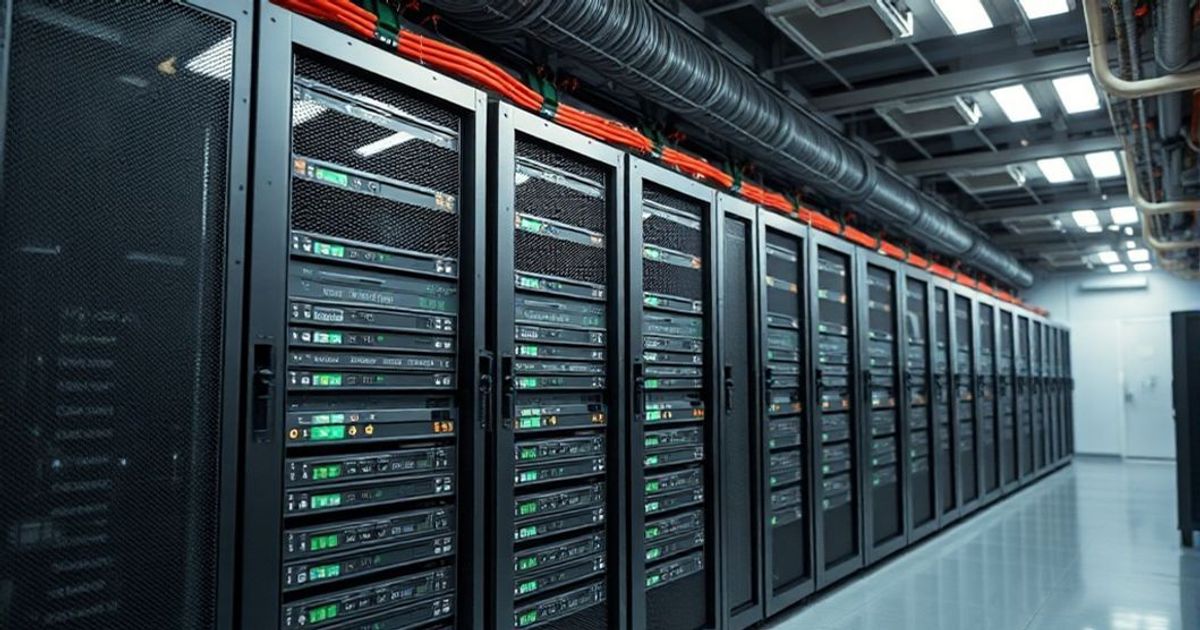
- Proven Expertise in Thermal Management: Cooling thousands of ASICs translates well to cooling GPU racks.
- Established Grid Interconnections: They have the legal and physical hookups to pull significant megawatts.
Companies like Hut 8, Hive Digital, and Iris Energy are leading this charge, dedicating capital and megawatts to GPU clusters for AI inference and training workloads. This provides a diversified, often higher-margin revenue stream that is uncorrelated to Bitcoin's price volatility.
The Hardware Transition
This pivot requires capital. It means diverting funds from next-generation Bitcoin ASICs (like the Bitmain S21) to NVIDIA H100 or equivalent GPUs. The balance sheet strength to fund this transition is another key differentiator. Miners are exploring hybrid setups, dynamic load balancing, and even repurposing older mining sites into full-time AI data centers.
Consolidation: The Inevitable Shakeout
Not every miner can pivot to AI. The capital requirements and technical expertise are high. This sets the stage for intense industry consolidation through 2025 and into 2026. We are likely to see:
- Mergers of Equals: Mid-tier players combining to achieve scale and share infrastructure costs.
- Acquisitions by Giants: Well-capitalized public miners (e.g., Riot, CleanSpark) acquiring smaller rivals for their power contracts and sites at distressed prices.
- Asset Fire Sales: Financially strained miners selling off their fleet of ASICs or their most valuable asset—their power purchase agreements (PPAs).
This consolidation will lead to a more centralized, but potentially more resilient and professional, mining industry. Hash rate will concentrate in the hands of the most efficient, best-capitalized, and most strategically agile operators.
What This Means for Traders
The evolving mining landscape presents distinct opportunities and risks for traders and investors:
- Scrutinize the Business Model: Do not treat all mining stocks as pure Bitcoin bets. Deeply analyze their power cost (in cents/kWh), their HPC/AI strategy roadmap, and the capital allocated to it. A miner with a viable, revenue-generating AI division should trade at a different multiple than a Bitcoin-only shop.
- Monitor Hash Price and Industry Health: Use metrics like hash price (revenue per TH/s) and the global hash rate as indicators of overall network miner stress. A sustained low hash price accelerates consolidation.
- Watch for M&A Activity: Consolidation news will be a major price catalyst for individual stocks. Being acquired at a premium can yield sudden returns, while being left behind may signal weakness.
- Understand the New Correlation: Miners with successful AI pivots may see their stock prices partially decouple from Bitcoin and correlate with tech/AI sector performance. This changes the traditional crypto equity risk profile.
Conclusion: The 2026 Landscape
By 2026, the Bitcoin mining industry will look fundamentally different. The survivors will likely fall into two camps: ultra-low-cost, hyper-efficient Bitcoin-only miners operating at the absolute edge of profitability, and diversified tech infrastructure companies that use Bitcoin mining as a foundational load but derive significant income from AI, cloud computing, or other energy-intensive applications.
The fight to survive is already underway. It is a battle fought on balance sheets, in power procurement offices, and in data center design rooms. For the market, this period of creative destruction, while painful for some, will forge a more sophisticated and resilient infrastructure layer for the Bitcoin network. Traders who can identify the operators navigating this transition successfully will be positioned to capitalize on the next phase of digital asset infrastructure growth.