70% Ether Positions Long as Whale Accumulation Tightens Supply (2024)
Key Takeaways
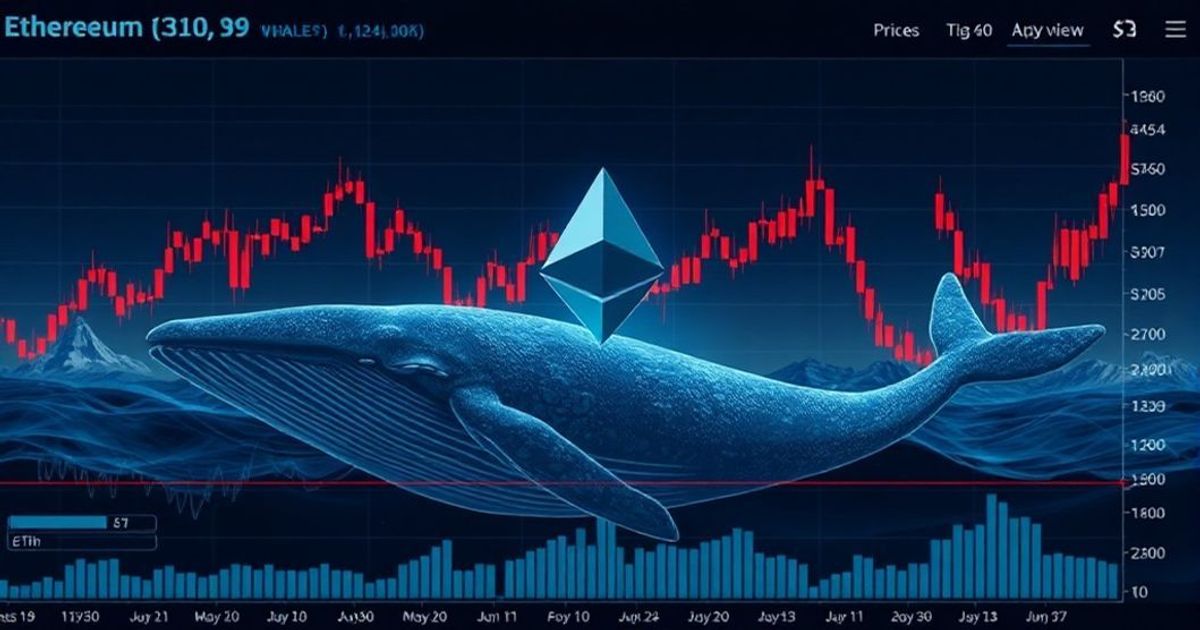
Ethereum's derivatives market is exhibiting extreme bullish positioning, with a staggering 70% of positions net long. Concurrently, large-scale investors, or 'whales,' have accumulated over $2 billion worth of ETH in recent weeks. This dual dynamic of leveraged bullish bets and physical supply absorption by major players is creating a historically tight supply environment, setting the stage for a potential explosive price move.
The Anatomy of a 70% Long Market
The statistic that 70% of Ether derivatives positions are net long is not just a bullish signal; it's a reflection of overwhelming market conviction. This data, typically derived from aggregated exchange futures and perpetual swaps positioning, indicates that the vast majority of leveraged traders are betting on higher prices. Such a skew is significant in a market known for its two-sided action.
This extreme positioning is further amplified by record-high leverage levels across major trading platforms. Traders are not only betting long but doing so with increased borrowed capital, magnifying both potential returns and risks. This creates a market structure that is highly sensitive to price movements—gains can be accelerated by forced buying (short squeezes), while losses can be exacerbated by cascading liquidations.
Understanding the Leverage Risk
While high long leverage demonstrates confidence, it also represents a known vulnerability. A sharp, unexpected downturn could trigger a wave of automatic liquidations on these leveraged long positions. This selling pressure can create a self-reinforcing downward spiral. Therefore, the 70% long figure is a double-edged sword: a testament to bullish sentiment but also a potential source of future volatility if that sentiment abruptly shifts.
The Whale Accumulation: A $2 Billion Supply Shock
Parallel to the derivatives frenzy, a more substantive and perhaps more impactful trend is unfolding on-chain. Whale entities—defined as wallets holding between 10,000 and 1,000,000 ETH—have been net accumulators, adding over $2 billion in Ether to their holdings. This activity represents a direct withdrawal of liquid supply from the open market.
Whale accumulation operates on a different logic than leveraged futures trading. It involves the actual purchase and withdrawal of ETH to private custody, signaling a long-term investment thesis rather than a short-term speculative play. This behavior reduces the circulating supply available for trading on exchanges, a fundamental metric known as 'exchange reserves.' As supply tightens, even moderate increases in demand can lead to disproportionate upward pressure on price.
Staking and the Supply Lock
The whale accumulation trend is compounded by Ethereum's proof-of-stake mechanics. Over 27% of the total ETH supply is now staked in the Beacon Chain, effectively locked and removed from daily trading liquidity. Whales are significant participants in staking, meaning their accumulation often has a dual effect: buying spot ETH and simultaneously committing it to long-term network security, further constricting available supply.
What This Means for Traders
For active traders, this confluence of factors creates a unique and high-stakes environment. Navigating it requires a strategy that acknowledges both the potent bullish setup and the embedded risks.
- Monitor Funding Rates: In a market 70% long, perpetual swap funding rates will often turn significantly positive. While this confirms bullish sentiment, excessively high positive funding can become a drag on long positions over time and may precede a 'long squeeze' if the market stalls. Watch for normalization.
- Watch Liquidation Clusters: Use heatmaps to identify large clusters of long liquidation levels below the current price. These zones act as potential 'danger areas.' A price dip into these clusters could trigger accelerated selling, creating a buying opportunity for the brave or a signal to tighten stops for existing longs.
- Follow On-Chain Flow: Prioritize on-chain analytics over sentiment alone. Tools that track exchange inflows/outflows and whale wallet movements are crucial. A continuation of whale accumulation and declining exchange reserves is a stronger fundamental pillar than derivatives positioning alone.
- Diversify Timeframes: Consider pairing short-term leveraged positions with core spot holdings. The derivatives market suggests short-term volatility and opportunity, while whale and staking activity supports a longer-term bullish thesis for ETH as an asset.
The Path to a Breakout: Catalysts and Confluences
The critical question remains: when will ETH price break out from its recent range? A breakout is rarely caused by a single metric but by a catalyst that ignites the prepared fuel of market structure.
Currently, the fuel is present: tight supply (from whales and staking) and overwhelmingly bullish leverage. The needed catalysts could include:
- Spot Ethereum ETF Developments: A surprise approval or significant positive progress from the SEC would be a monumental demand-side catalyst, likely overwhelming the already tight supply.
- Broad Crypto Market Momentum: A decisive bullish move in Bitcoin, often leading the crypto cycle, could pull the entire market—including the leveraged ETH longs—into a powerful upward move.
- Ethereum Network Upgrade Catalysts: Successful implementation of key upgrades, like further EIPs to reduce transaction costs or enhance scalability, could renew fundamental investor interest.
- A Sustained Short Squeeze: If price begins to rise organically, it could trigger the liquidation of the relatively few but likely highly leveraged short positions, adding rocket fuel to the initial move and forcing some long liquidations to flip into buybacks.
Conclusion: A Powder Keg Waiting for a Spark
The Ethereum market is constructing a classic powder keg scenario. On one side, the derivatives market shows a crowded, leveraged long trade—a condition that often precedes sharp corrections. On the other, a more profound and less liquid fundamental shift is occurring as whales permanently remove billions in supply from the market. The tension between these two forces—speculative leverage and physical scarcity—defines the current moment.
For the breakout to occur sustainably, the market likely needs a fundamental catalyst to validate the bullish leverage and attract new capital beyond the whale cohort. Until then, the high long percentage suggests the market is vulnerable to shakes and pullbacks. The ultimate resolution, however, appears skewed to the upside. When supply is continuously absorbed by large, conviction-driven holders, the stage is set for scarcity to ultimately dictate price. The record long positions are simply betting that this moment arrives before the leverage itself becomes the market's undoing. Traders should prepare for volatility, but the underlying supply dynamics hint that any significant dip may be met with even stronger accumulation, paving the way for ETH's next major leg higher.